A smooth-running forage harvester is a quiet one. When your Claas Jaguar or John Deere 8000 starts to vibrate, the machine is trying to tell you something is wrong.
Ignoring vibration is dangerous. It leads to operator fatigue, cracked frames, and destroyed main bearings.
The cause is rarely the engine; it is almost always in the rotating assemblies. In this guide, Agmishop’s technical team helps you diagnose the top 5 causes of forage harvester vibration and how to fix them.
5 Reasons Your Forage Harvester Shakes
1. Unbalanced Chopping Drum (The #1 Culprit)
The chopping cylinder spins at over 1,000 RPM. At that speed, even a few grams of weight difference can cause massive shaking.
Mixed Knife Wear
If you replaced only some broken knives instead of the whole set, your drum is unbalanced. Old knives are lighter (due to wear) than new knives.
The Fix: Always replace knives in complete sets or opposing pairs.
Agmishop Standard: Our replacement knife sets are weight-matched at the factory to ensure perfect balance out of the box.
Sometimes the fix is free. Check inside the drum spider. Hardened mud or uneven sap buildup acts like a lead weight on a car wheel. Pressure wash the drum thoroughly.
2. Worn Main Drive Belts (Powerband)
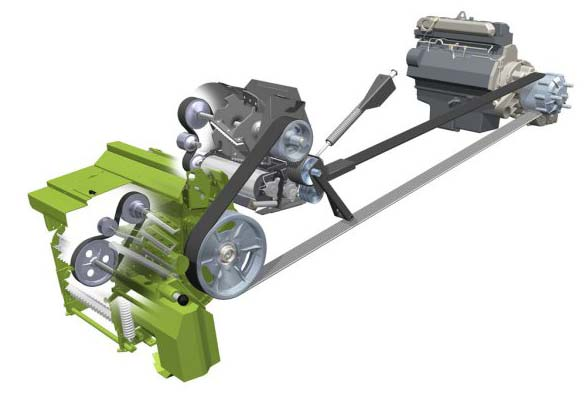
Your main drive belt transfers power from the engine to the drum.
The Symptom: A rhythmic “thumping” vibration, especially under load.
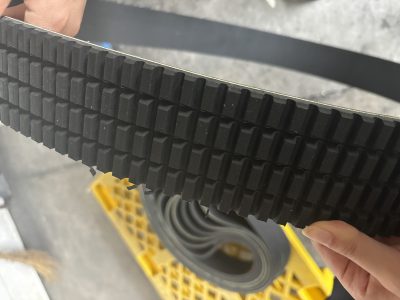
The Cause: If a chunk of rubber has peeled off the belt (due to stone damage) or the tie-band has separated, the belt becomes unbalanced.
The Fix: Inspect the belt. If you see missing lugs or separation, replace the entire belt set immediately.
Sometimes the vibration isn’t mechanical; it’s operational.
Worn Feed Roller Teeth
If your feed rollers are smooth, they cannot grip the crop firmly. Instead of a steady stream of crop entering the drum, the crop enters in “lumps” or “slugs.”
The Result: The drum takes a massive hit every few seconds, causing the whole machine to shudder.
The Solution: Aggressive, sharp feed rollers ensure a smooth crop mat and smooth operation.
4. Shear Bar Misadjustment
The gap between the knife and the shear bar must be parallel.
The Issue: If the gap is tight on the left but loose on the right, the knife “hammers” the crop on one side. This creates a high-frequency vibration and uneven chopping noise.
The Fix: Perform a shear bar adjustment (as detailed in our previous guide) to ensure the gap is uniform across the width.
5. Failing Bearings (The “Silent” Killer)
If the knives, belts, and flow are fine, but the vibration persists, you likely have a failing bearing.
Which Bearings to Check?
Chopping Drum Bearings: Place a pry bar under the drum and try to lift it. Any play indicates failure.
Accelerator (Blower) Bearings: The accelerator spins faster than the drum. Even minor wear here causes high-pitch vibration.
The Importance of “Weight-Matched” Parts
At Agmishop, we understand physics. We know that vibration destroys machines.
That is why we don’t just sell steel; we sell precision.
Balanced Knives: We control the weight tolerance of every knife we manufacture.
Uniform Density: Our feed rollers are cast to ensure consistent density and rotation.
Don’t let a $50 part destroy a $50,000 component.
Conclusion
Vibration is not “normal” for a forage harvester. It is a warning sign. Start by cleaning the drum, then check your knives and belts.
If you need to restore balance to your machine, browse our catalog of weight-matched knives and heavy-duty wear parts.