Blog
Looking at a Used Forage Harvester for Sale? Check These 3 Wear Parts First

Introduction
Buying a brand-new chopper is a massive capital investment. It’s no surprise that contractors and large-scale farmers spend hours scrolling through auctions and dealer lots looking for a reliable forage harvester for sale.
But buying used iron is risky. A machine might look clean on the outside, but if it has 1,500 chopping hours on the drum, the hidden wear parts could cost you thousands in your first week of harvest.
Before you sign the check for that used Claas or John Deere, open the housing and inspect these three critical areas. If they are worn out, use it to negotiate the price down—then rebuild it yourself.
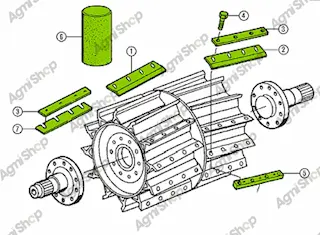
1. The Chopping Drum (Knives and Shear Bar)
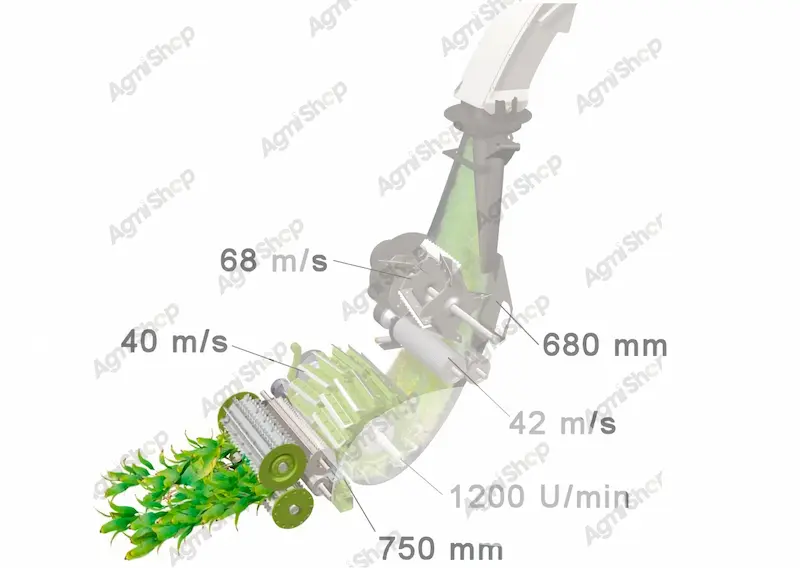
The drum is the beating heart of the machine. When inspecting a used chopper, don’t just look at the engine hours; look at the steel.
- The Knives: Run your hand (carefully) over the knives. Are they ground down to the wear line? Have they been mixed and matched? Mismatched knives cause severe vibration that destroys drum bearings.
- The Shear Bar: Check the edge. If the shear bar is rounded off instead of having a sharp 90-degree edge, the machine has been “hammering” the crop instead of cutting it.
The Fix: If the drum is exhausted, don’t walk away from a good deal. You can easily negotiate the price down and install a complete set of high-performance aftermarket forage harvester spare parts for a fraction of the OEM cost.
2. The Feed Rollers (The “Mouth” of the Machine)
Open the feeder house and inspect the upper and lower feed rollers. These rollers are responsible for grabbing the crop and compressing it into a tight, uniform mat before it hits the knives.
- What to look for: The teeth on the feed rollers should be aggressive and sharp. If they look smooth or “polished” from abrasive sandy soils, the machine will struggle to feed evenly. This leads to frustrating blockages and inconsistent chop lengths.
- The Fix: Replacing a smooth feed roller is a standard off-season job. Upgrading to heavy-duty feed rollers for Claas Jaguar will instantly restore the machine’s appetite.
3. The Kernel Processor (Corn Cracker)
If the forage harvester for sale was used primarily for maize, the kernel processor (KP) has taken a beating.
- The Inspection: Look at the teeth on the cracker rollers. Are they sharp, or are they flattened out? A worn-out KP will let uncracked corn pass straight through to the bunker, ruining your silage quality and starch availability.
- The Belt: Check the main drive belt (powerband) powering the processor. If the sidewalls are glazed, it’s been slipping and needs replacement.
Turn a “Fixer-Upper” into a Field Ready Beast
Finding a reasonably priced forage harvester for sale is just step one. Step two is getting it ready for the field.
Many buyers panic when they see worn knives or smooth rollers because they price out the replacement parts at their local OEM dealership. That is a mistake.
At Agmishop, we manufacture premium, factory-direct wear parts. By sourcing your replacement Claas parts or John Deere components directly from our factory, you can rebuild the chopping assembly of your used harvester for up to 50% less than dealer prices.
Buy the used machine. Upgrade the iron. Keep your profit.